My files
From the “Personal Area” at the top right of the electronic headquarters, you can access “My Files” to consult the processing status of your files and obtain a copy of the documents submitted electronically relating to procedures whose processing began after 1 January 2010.


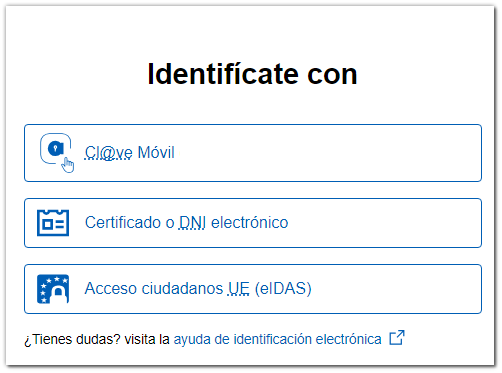
To access your records, you will need to have electronic identification, such as an electronic certificate, electronic DNI, mobile Cl@ve or eIDAS. You may access the system either on your own behalf or as a representative of a third party for whom you have empowerment to consult their records. If you are logging in as a representative, you must enter your tax identification number ( NIF ) in the first box and your first name and surname or company name in the second box.
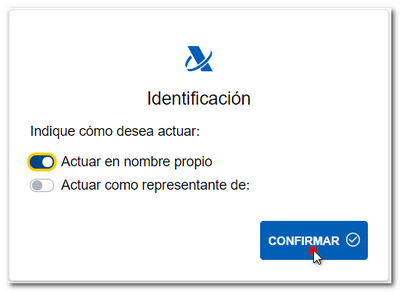
The authorised representative must have the general empowerment “GENERALAEAT” active, or empowerment for the formalities “CONESTRATRIB”, “CONESTRAADU” and “CONESTRANOTR”. In the latter case, you will only be able to consult the files permitted for each formality. Under no circumstances may Registry files be consulted through empowerment.
You may also access “My Files” on behalf of a third party if you have registration in the probate register as an heir to deceased natural persons or as a successor to legal persons or entities without legal personality that have been dissolved, or as the legal representative of persons lacking the legal capacity to act.
You can consult all cases or just those currently being processed, as well as search by a specific case number or reference number.
Upon logging in, the‘Pending’ tab is displayed, showing the cases grouped by type of procedure; the number of cases in each group is shown on the right in brackets. Above the list, there is an ‘Export’ link to download the records as a ‘.CVC’ file. This download will contain all the records, not just the first 1,000, and includes a link to consult the details. This feature may not be available at certain times when the Agency’s IT system is under heavy load.
The files are grouped into three levels. Under ‘Expand’, you can view the records contained in each group. If there are more than 1,000 cases, only the first 1,000 are displayed, sorted by the most recent date of the last action taken. The list can be sorted in ascending or descending order by any of its columns; to do this, click on the column header.
To view the details of a specific record, click on the link for that record.

The header of the file shows the type of procedure, the financial year, the file number and the administering body. You can also check the current status of the application and its history. The services available will vary depending on the type of file; for example, in the case of a tax certificate, the ‘Electronic document enquiry’ service is available.

On the‘All’ tab, cases are grouped by type of procedure, regardless of their current processing status. The number of records in each group is shown on the right, in brackets.

From the‘Search case’ tab, you can access the consultation function directly if you know the case number. Once you have entered the number or reference, click ‘Search’. You can access the relevant information via the linkage below.

In the‘Help’ tab, you will find very useful information on identification, access, the type of empowerment required, how to interpret the structure of the files you are consulting, and details of each one.

In addition, you can consult submitted tax returns, unread notifications and communications, direct debits and your submitted registry entries.

Consult submitted tax returns: with this option, you can obtain a complete copy of the forms you have submitted electronically by entering the required details marked with an asterisk and clicking ‘Search’. Using the ‘View’ button in each column, you can access the supporting document and a copy of the tax return, or download the file, respectively.

Consult unread notifications and messages: to consult them, click on the certificate number.

Consult your direct debits: to consult your direct debits, enter the required details marked with an asterisk and click on ‘Search’; you will then need to click on the reference number to view the rest of the information.

Consulting your registry entries: There are different categories of people authorised to consult registry entries: the data subject, a representative and a delegate/public official. For each of these, consultations can be made based on the status of the file or a specific date range. Select the option based on the status or date range and click ‘Search’; this will display the submissions of documentation made at AEAT offices using CVC files and those made via the electronic headquarters. Click on the registration number to view the details.

At the top, next to the name of the person you are consulting, there is also a link to the ‘My census details’ section.