II.8.3. Proof of the customs status of Union road motor vehicles
To determine the customs status of motor vehicles in the customs territory of the Union, the following rules must be observed:
-
The regulations governing the movement of goods from one point to another within the customs territory of the Union are fully applicable to the movement of motor vehicles, recreational craft, and private aircraft.
-
The term "circulation" is not limited to the use of the vehicle when it moves within the customs territory of the Union, but, as with other Union goods, also includes the transfer of ownership (supply/acquisition) and changes of residence involving the transfer of the vehicle without change of ownership.
-
Article 153 of the UCC states that "all goods within the customs territory of the Union shall be presumed to have the customs status of Union goods, unless proven otherwise." This presumption also applies to the circulation of vehicles.
-
For this reason, when vehicles are imported from a third country and released for free circulation without having been registered in a Member State, they may be dispatched to another Member State as Union goods based on the presumption set out in Article 153 of the UCC. These vehicles must receive the same treatment for registration purposes as those manufactured in the Union.
-
In such circumstances, the registration of new vehicles should not depend on proof of their customs status as Union goods.
-
In case of doubt, the competent authorities may request information as a form of mutual assistance. However, such requests should not be made routinely.
-
Consequently, Union vehicles must be able to circulate within the Union's customs territory under the same conditions as any other Union goods. No customs intervention is planned.
-
These rules do not affect applicable tax provisions, particularly those related to the requirement for registration in the owners' countries of residence.
-
Without prejudice to the rules set out above, any motor vehicle registered in an EU Member State shall enjoy Union status provided that:
(a) the relevant registration document is presented to the customs authorities of the Member State into which the vehicle is to be introduced; and
b) the registration of this vehicle, as shown in the document and, where appropriate, the registration plate, corresponds exactly to the characteristics listed below, according to the country of registration.
Failing this, proof of the customs status of Union goods must be submitted in accordance with Article 199 of the Agreement. -
Proof of the customs status of Union road motor vehicles by means of information taken from the registration (Article 208 of the AE):
Germany
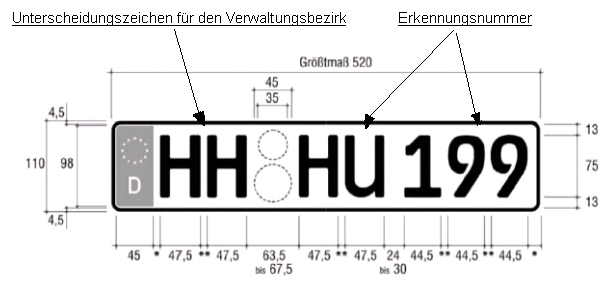
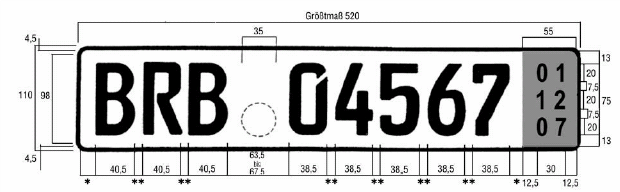
In Germany, proof of compliance with the Union specifications for the registration of motor vehicles (motor vehicles and their trailers) is considered valid if a national registration certificate has been issued and the vehicles bear a rectangular registration plate with a distinctive letter combination of the administrative district (up to three letters) and an identification number (consisting of a group of letters and numbers) (see example 1).
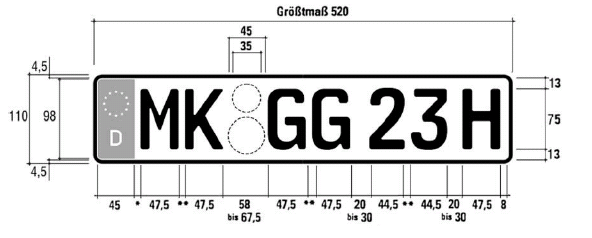
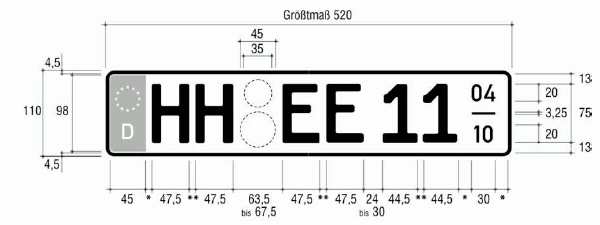
After the vehicle identification number, the registration plates may also bear the identification letter "H" ("old vehicle registration plate" for historic vehicles); see example 2) or bear a specific driving period ("temporary registration plate"; see example 3).
The Union specification test is not considered valid if the vehicles bear a registration plate:
- whose distinctive letter combination of the administrative district is replaced by the number 0 (special registration plate for the diplomatic corps and international organizations enjoying privileges or immunities);
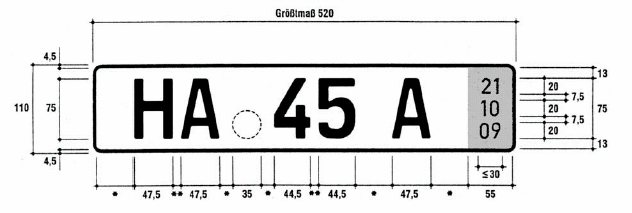
- which, after an identification number consisting exclusively of numbers, bears an identification letter - such as "A" - and an expiry date indicated in a red field;
- for export (see example 4);
- valid for a short period (limited-period license plate), the identification number of which is composed exclusively of numbers and includes an expiration date indicated in a yellow field.
- which is specifically used to subject a vehicle to a test procedure or a driving test or for its movement (see example 5);
- whose characters are not in black, but in red.
- License plate numbers can consist of one or two lines.
Example 1
Distinctive letter combination of the administrative district and recognition number
Example 2 ("Vintage vehicle registration plate" for historic vehicles)
Example 3 (Temporary license plate)
Example 4 (License plate for export)
Example 5 (Registration plate used when a vehicle is undergoing a test procedure, a driving test or for transport)
Austria
In Austria, the numbering system consists of a "distinctive sign" and a "reserved sign".
The distinctive sign consists of one or two letters and identifies the administrative district (political district), statutory city, state government or federal authorities; The prefix consists of a combination of numbers and letters.
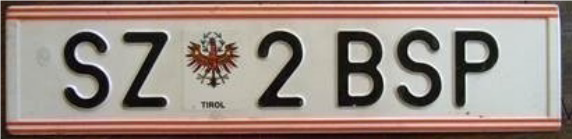
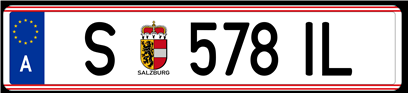
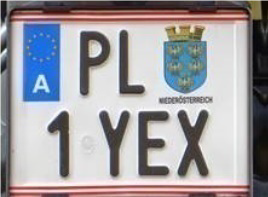
The license plates are white with black characters and two narrow red, white and red stripes along the top and bottom edges. The plates are made up of Latin letters and Arabic numerals. Since November 2002, the license plates have featured a blue field on the left side with a white letter "A" below the EU crown of stars.
The symbols and identifying letters are separated by an emblem. In the case of ordinary license plates, it is the coat of arms of the respective federal state and, below, the name of said state in black capital letters.
The plates—mostly in a landscape rectangular format with rounded corners—have the following dimensions (width × height):
- A single line: 520 × 120 mm, character height 67 mm
- Two lines: 300 × 200 mm, font height 67 mm
Example illustrations:
Belgium
Motor vehicles registered in Belgium are considered to have the customs status of Union goods, except in the cases described below.
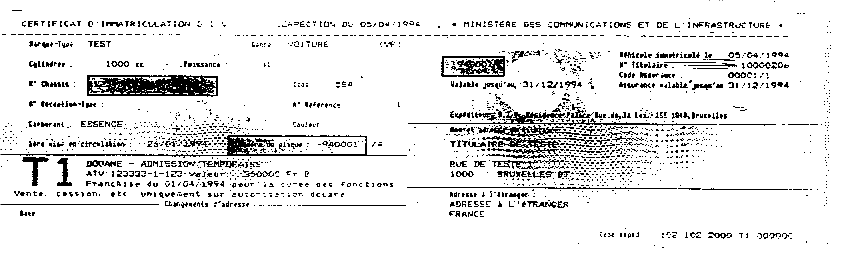
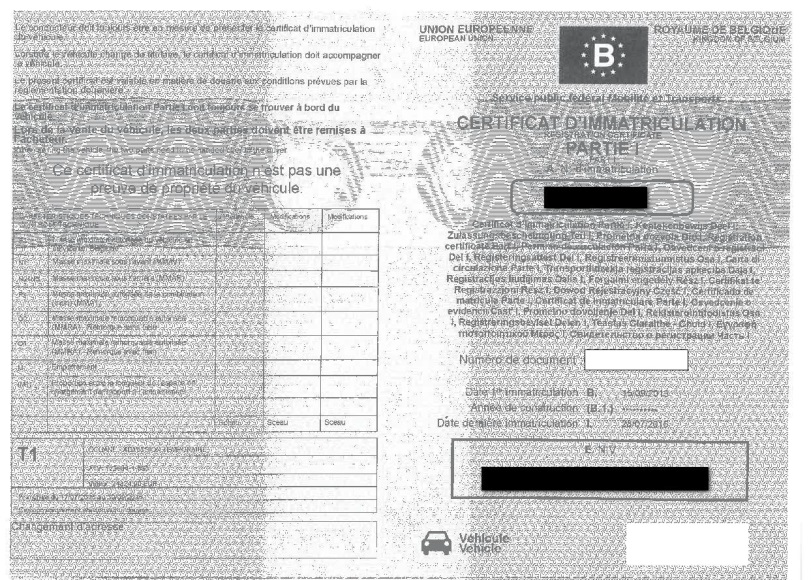
1. The registration certificate, as illustrated below, bears the abbreviation T1, which:
a. If it was issued before 16 November 2010, it was presented on the back of the first page, on the left side of the section reserved for temporary importation;
b. If it was issued after 16 November 2010, it was shown on the front of Part 1, in the box relating to temporary importation, in the lower left corner.
2. If the vehicle bears a "commercial" license plate, it cannot benefit from the customs status of EU goods. In this case, the authorization for temporary importation must be in the vehicle. The registration certificate includes, instead of the vehicle's characteristics, the license plate number, the expiration date, the type of "commercial plate," the national registration number or company number, and the maximum displacement or maximum power requested by the owner.
The corresponding license plates include an index number, a group of three letters and a group of three figures, in the following combinations:
- "commercial plates" for cars: 1 — Z + 2 other letters + 3 numbers;
- "commercial plates" for motorcycles: 1 — ZM or 1 – ZW + another letter + 3 numbers (dimensions are different from other plates; index and letters at the top, numbers at the bottom);
- "commercial plates" for mopeds: 1 — SZ + another letter + 3 numbers (dimensions are different from other plates; index and letters at the top, numbers at the bottom);
- "commercial plates" for trailers: 1 — ZQ or 1 — ZU + another letter + 3 digits.
The numbers and letters are green and arranged on a white background. In addition, a self-adhesive sticker indicating the year must be placed in a designated location.
3. If the vehicle bears a "test" plate, it cannot benefit from the customs status of EU goods. In this case, the authorization for temporary importation must be in the vehicle. However, these vehicles are not permitted to circulate outside Belgian territory. The registration certificate includes, instead of the vehicle's characteristics, the license plate number, the expiration date, the type of "commercial plate," and the national registration number or company number.
The corresponding registration plates include an index number, a group of three letters and a group of three figures (two in the case of mopeds), in the following combinations:
- for passenger cars: 1 — ZZ + another letter + 3 digits;
- for motorcycles: 1 — ZZM or 1 – ZZW + 3 digits (dimensions are different from other plates; the letters at the top and the numbers at the bottom);
- for mopeds: 1 – SZZ + 2 digits (dimensions are different from other plates; the letters at the top and the numbers at the bottom);
- for trailers: 1 – ZZQ or 1 – ZZU + 3 digits.
The numbers and letters are green and arranged on a white background. In addition, a self-adhesive sticker indicating the year must be placed in a designated location.
Bulgaria
Motor vehicles registered in Bulgaria are considered to have the customs status of Union goods when they bear a rectangular registration plate with a combination of letters and numbers displayed in black on a reflective white background, with a blue band on the left side.
The blue band of the license plate features the Bulgarian flag and the letters BG in white.
The inscription consists of a combination of three groups of characters (e.g., C 5027 AB).
- The first group is made up of letters and corresponds to the territorial division.
- The second group consists of four digits.
- The third group consists of series of one or two letters.
Motor vehicles registered in Bulgaria are not considered to have the customs status of Union goods if they carry:
- a rectangular registration plate with an inscription consisting of a combination of six figures separated in the middle by the letter "B" in black on a white background and the year of validity indicated on a red background on the right-hand side;
- a rectangular number plate with an inscription consisting of a combination of six figures separated in the middle by the letter "T" or "H" in black on a white background;
- a rectangular registration plate with an inscription consisting of a combination of the letters "C", "CC" or "CT" with figures indicated in white on a red background; or
- a rectangular number plate with a combination of the letters "XX" and white numbers on a blue background.
Vehicles with these types of registration may or may not have EU customs status.
Such status can only be determined by consulting the relevant documentation.
Czech Republic
1. Motor vehicles registered in the Czech Republic are considered to have EU customs status if their registration number falls into one of the following special series:
- Rectangular registration plate with a white background and an inscription of between five and seven characters (at least one letter and one number) indicated in black, for example, 1K3 2246. The first letter corresponds to the territorial subdivision. "Custom" plate consisting of five, seven or eight characters (at least one letter and one number) in black on a white background. Army vehicles incorporate license plates consisting of seven Arabic numerals (without letters) on a white background. The registration plate for special vehicles and tractors for agricultural and forestry use has a yellow background.
Some motor vehicles circulate with a white registration plate belonging to previous series, consisting of a combination of two or three letters and four black numbers separated in pairs by hyphens (for example, CHA 63-46). Trucks, buses and trailers belonging to earlier series carry a rectangular license plate with a yellow background. - Rectangular, white license plate with black numbers, used for export purposes, with a red area above which the expiration date is indicated.
- Special rectangular license plate, white with black characters, with the inscription consisting of the letters "EL" followed by three, four or five digits (electric vehicles).
- Special rectangular registration plate, white with green characters, with two digits followed by the letter "V" and two, three or four digits (historic vehicles).
- Special rectangular license plate, white with green characters, with two digits followed by the letter "R" and three or four digits (racing cars and motorcycles).
- Special rectangular license plate with green characters, for permanent handling, with between five and seven characters, the first of which corresponds to a letter representing the territorial subdivision followed by numbers.
- Special rectangular registration plate, with green characters, used for test purposes, consisting of five characters with the letter "F" followed by numbers.
2. If motor vehicles registered in the Czech Republic bear a rectangular white number plate with three figures followed by the letters "CD", "XX", "XS" or "HC" and two figures in blue (diplomatic corps or foreign delegation), they are not considered to have Union customs status unless this is verified by consulting the relevant documentation.
Cyprus
The agency responsible for road traffic in Cyprus has been computerized since January 1997. All registration certificates issued since then are printed by computer.
a. Vehicles with permanent registration in Cyprus
All vehicles permanently registered in Cyprus have a registration number consisting of one, two, or three Latin characters and a serial number between 1 and 999. Each vehicle has two license plates, one on the front, with a reflective white background, and one on the back, with a yellow or reflective white background, both with black characters and numbers.
In most vehicles whose registration numbers are of the LLNNN type (e.g. e.g., YW764) or LLLNNN (p. e.g., EAY857), in order to determine the customs status of Union goods, it is necessary to check the data appearing on the registration certificate, as explained in Table A.
b. Vehicles with diplomatic registration (CD or AT)
For diplomatic vehicles, the registration certificate shows two numbers. The first of them corresponds to the permanent registration number; The second indicates that the vehicle belongs to the diplomatic corps.
The registration number for these vehicles consists of a two-digit combination, indicating the embassy or legation code, followed by the letters "CD" or "AT" and the number corresponding to the vehicle within that embassy or legation.
These vehicles circulate with diplomatic registration plates for as long as they hold diplomatic status; When this condition ceases to exist, they use the permanent registration number. The EU customs status of these vehicles can be verified by consulting their documentation.
Table A
| Information (tax data) (In English and Greek, as shown on the registration certificates) |
Possible form of information with translation in English written in lowercase |
|
|---|---|---|
| 1 | Customs duties Τελωνειακός Δασμός |
Duty-free, partially paid duty, paid duty ΠΛΗΡΗΣ ΑΠΑΛΛΑΓΗ, ΜΕΡΙΚΗ ΑΠΑΛΛΑΓΗ, ΚΑΤΑΒΛΗΘΗΚΕ |
| 2 | Code of Duty Relief Κ.Ε Δασμών (Κωδικός Εξαίρεσης Δασμών) |
01.01, 01.18, 01.19, 07.02, 07.03, 07.05, 07.06, 07.07, 11(4)α, 11(4)β, 11(4)γ |
Croatia
1. Motor vehicles registered in Croatia are considered to have the customs status of EU goods if they bear the appropriate registration plates.
The license plates are made of metal coated with a reflective film. They bear the indication of the administrative district and the vehicle registration number in black characters on a white background. The Croatian national coat of arms appears in the area between the administrative district and the vehicle registration number.
In exceptional cases, the license plates of vehicles that do not meet the established requirements regarding dimensions (length, width, and height), for example, whose maximum weight exceeds the prescribed maximum or whose axle weight exceeds the authorized maximum, bear the letters and numbers indicated in red.
The license plates of vehicles owned by foreign citizens who obtain a temporary or permanent residence permit (temporarily registered vehicles; Vehicles owned by foreign commercial, business, cultural or other representative companies; foreign correspondents' offices and permanent foreign correspondents) are marked with letters and numbers in green.
2. The license plates of motor vehicles owned by diplomatic or consular missions, representations of foreign countries, and agencies of international organizations and their staff in Croatia are blue, with letters and numbers indicated in yellow. They also bear a numeric code for the country to which the agency belongs and a letter corresponding to the activity carried out by the agency, that is, the position of the person in question at the agency and the vehicle registration number.
Denmark
Road motor vehicles registered in Denmark are considered to have the customs status of Union goods when the following statement appears in the lower box of the registration certificate: «IKKE TOLDDOKUMENT VED OMREGISTRERING» (translation: In case of change of ownership, no customs documents need to be submitted).
Slovakia
1. Motor vehicles registered in Slovakia are considered to have the customs status of Union goods if their registration number corresponds to one of the following special series:
- Rectangular white license plate with an inscription consisting of two letters and five characters (three numbers and a pair of letters) in black, separated by a hyphen (for example, BA-858BL). The first pair of letters indicates the territorial subdivision. The second group of characters after the hyphen can consist of five letters, letters in the first four positions and a number in the fifth position, or letters in the first three positions and numbers in the fourth and fifth positions.
- Certain motor vehicles circulate with white registration plates belonging to previous series consisting of a combination of two or three letters and four black numbers separated in pairs by hyphens (for example, BA 12-23).
- Special rectangular white license plate with red characters arranged in two lines. The first line consists of two letters indicating the territorial subdivision and the second line consists of the letter "M" followed by three numbers. Another letter can be added after the letter "M". These plates are intended for newly manufactured or recently purchased vehicles or for vehicles used for testing purposes.
- Special rectangular yellow license plate with black characters arranged in two lines. The first line consists of two letters indicating the territorial subdivision and the second line consists of the letter "V" followed by three numbers. Another letter can be added after the letter "V". These plates may be issued to vehicles registered for export purposes. The expiration date is shown in the field in the upper right corner.
- Special rectangular yellow license plate with red characters arranged in two lines. The first line consists of two letters indicating the territorial subdivision and the second line consists of the letter "H" followed by three numbers. Another letter can be added after the letter "H". These plates can be issued to historic vehicles.
- Special rectangular white license plate with blue characters arranged in two lines. The first line consists of two letters indicating the territorial subdivision and the second line consists of the letter "S" followed by three numbers. Another letter can be added after the letter "S". These plates may be issued to vehicles registered for sporting purposes.
- Special rectangular white license plate with green characters arranged in two lines. The first line consists of the letter "C" followed by another letter, and the second line consists of five characters. Such plates may be issued to cars imported individually into Slovakia whose technical conformity has not been proven or to other vehicles.
2. However, motor vehicles fitted with a rectangular blue registration plate bearing the letters "EE" or "ZZ" followed by five yellow numbers belong to the various diplomatic corps or foreign missions and may or may not enjoy customs status as Union goods. Such a condition can only be verified by consulting the relevant documentation.
Slovenia
Motor vehicles registered in Slovenia are considered to enjoy the customs status of EU goods provided they have a rectangular registration plate bearing an alphanumeric code (corresponding to the regions) consisting of three to six letters or a combination of letters and numbers, and a Slovenian registration certificate.
Spain
1. The license plate of a motor vehicle consists of a combination of two groups of letters. The first indicates the provincial acronym (for example: MA — Malaga, M — Madrid); The second consists of one or two letters and a group of numbers (0000 to 9999) that appear between the two groups of letters (for example, MA-6555-AT).
In Spain, there are still motor vehicles circulating whose license plates belong to old series consisting of a combination of one or two letters and six digits at most (for example: M-636.454).
Since October 2002, motor vehicles have had a license plate consisting of four digits followed by three letters, without provincial identification (for example: 4382 BRT).
Motor vehicles registered in Spain under the above series are considered to have the customs status of EU goods.
2. Motor vehicles registered in Spain are considered not to have EU customs status if their registration corresponds to one of the following special series:
- «CD», «CC».
- A tourist registration plate whose inscription consists of a combination of two groups of numbers (the first is between 00 and 99; the second is between 0000 and 9999) and a group of letters (one or two depending on the case). Each group is separated from the others by a hyphen (for example: 00-M-0000).
- A tourist license plate with a vertical red stripe, 3 cm long, on which the last two digits of the year in question appear in white (the first above the second) and the month in Roman numerals (below the digits). For example, 00-M-0000 — 86VI. The purpose of this registration is to establish the expiration date of the temporary circulation permit.
Estonia
Motor vehicles are registered in Estonia in accordance with the regulations applicable to them. The registration number of a motor vehicle is a combination of three letters and three numbers. Since May 2004, the words "EST" have appeared to the left of the registration number.
Finland
Motor vehicles registered in Finland are considered to have the customs status of EU goods, unless they have been registered temporarily for export purposes (export registration), in which case they must bear a registration plate containing a letter and a maximum of four numbers in black on a white reflective background. In addition, on the right side of the license plate, the year and month in which the license plate expires are displayed in white on a reflective red background.
On the other hand, motor vehicles carrying the following are considered not to have the customs status of Union goods:
- a transport plate showing a letter and at most four red numbers on a white reflective background;
- a test plate showing, in black, the word "KOE" (test) vertically, a letter and, at most, three digits on a reflective yellow background.
France
Motor vehicles registered in France are considered to have the customs status of Union goods, except when their registration belongs to one of the following special series:
- CMD, CD, C, K (diplomatic status and similar)
- TT (temporary stay)
- IT (temporary stay)
- WW (garage)
Greece
Motor vehicles registered in Greece are deemed to meet the conditions laid down in Articles 9 and 10 of the Treaty establishing the European Economic Community when they are fitted with a rectangular, white registration plate containing a combination of three letters and four figures (e.g. BAK 7876) or exclusively six figures (e.g. 237.568 – an old registration plate which is still valid) and the registration document is form T-01-19.
Vehicles fitted with a rectangular registration plate bearing the following information shall not be considered to have Union customs status:
- the letters CD or ΔΣ (diplomatic corps) before the number (green plate);
- the letters Ξ A (foreign mission) before the number (yellow plate);
- the letters EX (temporary admission) before the number (white plate).
Hungary
Motor vehicles registered in Hungary are considered to have the customs status of Union goods, except when their registration falls into one of the following special series:
- V (temporary stay);
- E (provisional).
Ireland
Motor vehicles registered in Ireland are considered to have the customs status of Union goods only if their registration falls within a series other than the ZZ series (a temporary registration system consisting of the letters ZZ followed by a unique five-digit number) and the registration card does not contain any special customs information (for example, information relating to the Revenue Commissioners). This indication is always accompanied by the customs stamp.
Italy
Motor vehicles registered in Italy are considered to have the customs status of Union goods except in cases where:
1. Your registration number corresponds to one of the following special series:
- EE (Escursionisti Esteri)
- CD (Corpo diplomatico)
2. The license plate bears the word "PROVA",
3. The registration plate bears the initials "SO" and the registration document (circulation booklet) bears the following indication:
«The vehicle must be formally formalized in the case of transfer of ownership or transfer of residence of the owner from the territory of Livigno to the other commons. Produrre doganale document to the pra di Sondrio».
Letonia
Motor vehicles registered in Latvia are considered to have the customs status of Union goods when they bear a white rectangular registration plate, normally consisting of a combination of two letters and between one and four figures in black (e.g. EP-6037), but may also consist exclusively of letters or figures, and a registration document has been issued in respect of them. Since 1 May 2004, the right side of the plate also features the national flag of Latvia or the EU flag, with the crown consisting of twelve stars on a blue background, and two black letters (LV).
Lithuania
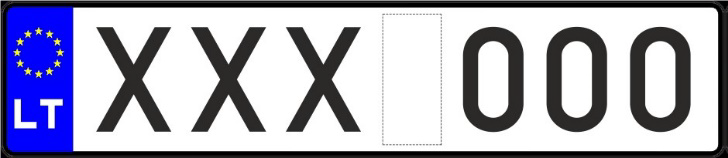
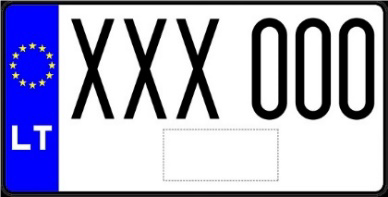
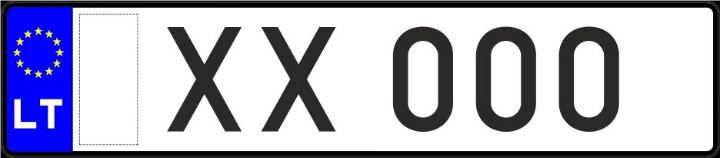
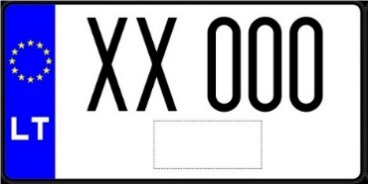
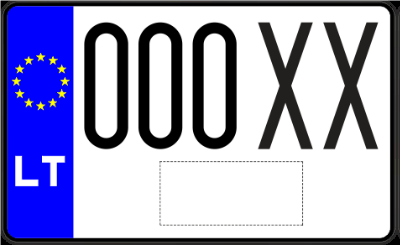
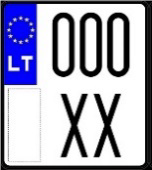
Motor vehicles registered in Lithuania are considered to have the customs status of Union goods if a registration certificate has been issued and the vehicle bears a rectangular registration plate (dimensions: 520 × 110 mm or 300 × 150 mm), white, reflective and with a repetitive safety mark. On its left edge it has a blue band and the borders, letters and numbers are black. The plate features a blue stripe on the left side bearing the EU emblem and a white distinctive mark consisting of the letters "LT" for Lithuania. The inscriptions on Lithuanian license plates and their compositions are described below.
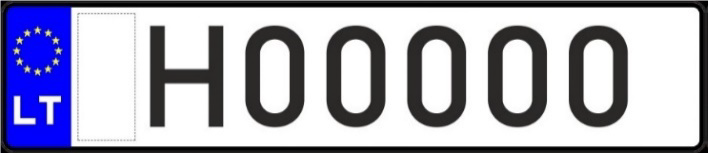
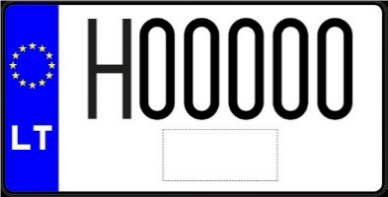
- Three letters and three figures for passenger cars, two letters and three figures for trailers and semi-trailers, three figures and two letters for motorcycles (dimensions: 250 × 150 mm, 185 × 210 mm or 520 × 110 mm), two figures and three letters for mopeds (motorcycles) (dimensions: 145 × 120 mm or 520 × 110 mm) and two figures and two letters for large-displacement quadricycles (dimensions: 250 × 150 mm); see example 1. The letter "H" and five figures indicating the serial number for the designation of historic automobiles. These types of plates have been available since April 3, 2018 (see example 2).
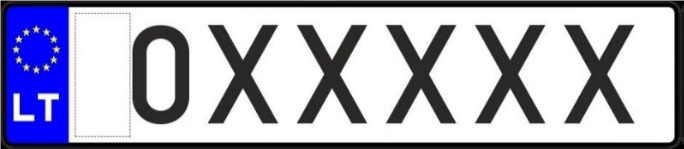
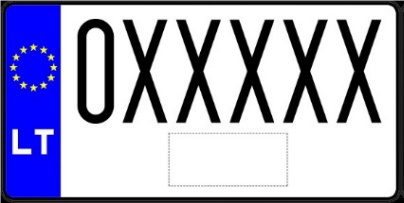
- Between one and six characters, one of which must be a number, for personalized plates (which include an inscription according to the applicant's request) (see example 3).
- Two letters (the letter "E" and any other letter of the alphabet in ascending order) and four digits that indicate the serial number of an electric vehicle. These types of plates have been available since 1 July 2016 (see example 4).
- The letter "T" and five digits for taxis. These types of plates have been available since April 3, 2018 (see example 5).
Example 1
For cars
For trailers or semi-trailers
For motorcycles
Example 2
Example 3
Example 4
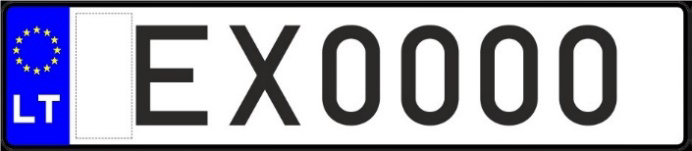
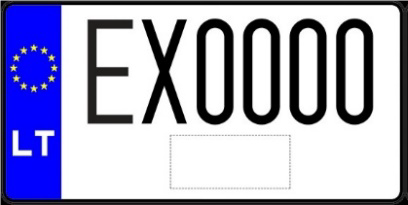
Example 5
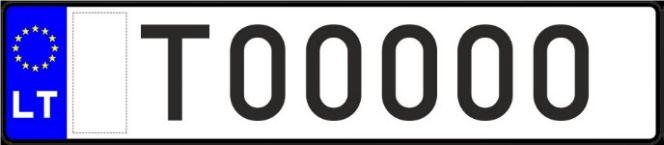
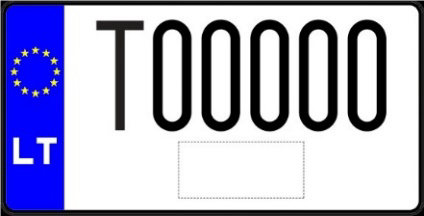
Motor vehicles registered in Lithuania are not considered to have the customs status of Union goods if they bear the following types of registration plates.
- The rectangular diplomatic registration plate for foreign missions and international organizations.
The surface of this plate is reflective green and incorporates a repetitive safety marking. The borders, letters and numbers are white. The inscriptions on this type of plaque consist of six digits. The first two indicate the code of the foreign mission assigned by the Protocol Department of the Ministry of Foreign Affairs in accordance with the order of accreditation of the foreign mission in Lithuania. The third indicates the vehicle category (the status of the person who owns the vehicle). The last three digits indicate a serial number issued for the plates. These types of plates have been available since 11 October 2004 (see example 6).
- The temporary commercial license plate, rectangular in shape.
The surface of this plate is reflective white and incorporates a repetitive safety marking. The left edge features a blue stripe, and the borders, letters and numbers are red. The plate features a blue stripe on the left side bearing the EU emblem and a white distinctive mark consisting of the letters "LT" for Lithuania. Temporary vehicle registration plates can be issued to passenger cars, trailers, and motorcycles. Passenger cars and trailers are designated by the letter "P" and five digits indicating a serial number, while motorcycles are designated by the letter "P" and four digits indicating a serial number. Temporary vehicle registration plates have been available since September 30, 2004. Since April 3, 2018, these types of plates have been issued for an unlimited period. These temporary plates may only be used to designate the vehicles to which they belong and may be used in public exclusively within the territory of Lithuania (see example 7).
- The temporary (transit) license plate, rectangular in shape.
The surface of this plate is reflective white and incorporates a repetitive safety marking. On the left edge there is a blue stripe and the borders, letters and numbers are red. The plate features a blue stripe on the left side bearing the EU emblem and a white distinctive mark consisting of the letters "LT" for Lithuania. These types of plates can be issued for passenger cars, trailers and motorcycles exported from Lithuania (see example 8).
Motor vehicles with the types of registration mentioned above may or may not have Union customs status. Such status can only be determined by consulting the relevant documentation.
Example 6
For passenger cars and trailers

Format 1: 520 × 110 mm
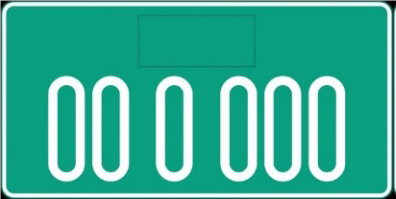
Format 2: 300 × 150 mm
For motorcycles
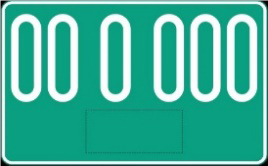
Format 3: 250 × 150 mm
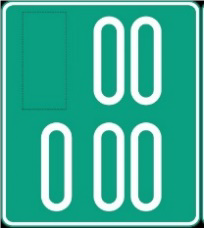
Format 5: 182 × 210 mm
For mopeds
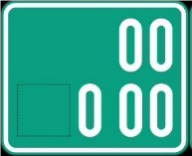
Format 4: 145 × 120 mm
Example 7
For passenger cars and trailers

520 × 110 mm

300 × 150 mm
For motorcycles
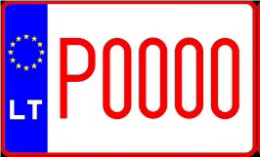
250 × 110 mm
Example 8
For passenger cars and trailers
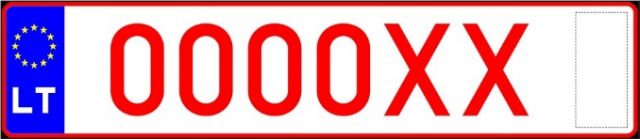
520 × 110 mm
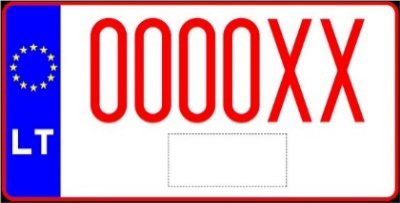
250 × 110 mm
Luxembourg
Motor vehicles registered in Luxembourg are considered to have the customs status of Union goods except in cases where:
1. The registration document (grey card) bears a special stamp with the mention:
«DOUANE — TEMPORARY ADMISSION
Rights due in case of sale»
Malta
Motor vehicles registered in Malta are considered to have the customs status of Union goods when they are fitted with two rectangular registration plates.
These plates are placed, respectively, on the front and rear of the vehicle in question in such a way that the letters and numbers appearing on them are in the correct order.
Maltese registration plates must consist of three numerical, alphabetical or alphanumeric combinations.
They also include the EU emblem with the crown of twelve stars under which the letter "M" appears. They also have a hologram underneath which the serial number of the plate appears.
Motor vehicles registered in Malta are not considered to have Union customs status if their registration plate consists of one of the following combinations:
CD* *** Diplomats
TRIAL RN *** Car Importers
DDV *** High-ranking guests in the diplomatic sphere
PRO *** Protocol
DMS *** Diplomatic Missions
*** **X Export by commercial operators
TF* *** Tax Exemption
GV* *** State Vehicles
GM ** Ministerial Vehicles
Netherlands
Motor vehicles registered in the Netherlands are considered to have the customs status of Union goods, except where the registration document (known as "kentekenbewijs") bears one of the following letters and numbers:
CD-xx-xx
xx-CD-xx
CDJ-xxx
BN – xx-xx
GN – xx-xx
Poland
Motor vehicles registered in Poland are considered to have the customs status of Union goods in cases where:
- They have a rectangular license plate with a combination of letters and numbers (up to seven numbers, with at least one letter) in black on a white or yellow reflective background (historic vehicles); red on a reflective white background (test vehicles); white on a reflective blue background (diplomats and similar); or white on a black background (old license plate still valid); and
- A Polish registration certificate has been issued for the vehicle in question.
Portugal
- Motor vehicles registered in Portugal are considered to have the customs status of Union goods when they are fitted with a rectangular, white number plate bearing a combination of two letters and four black numbers, separated into groups of two by hyphens (for example: AB-32-46). The registration certificate is form "LIVRETE 1227".
- However, motor vehicles that are fitted with a white, rectangular license plate bearing the letters CD, CC, or FM belong to different diplomatic corps and may or may not have customs status for Union goods. Such a condition can only be verified by consulting the relevant documentation.
United Kingdom (Northern Ireland only)
In accordance with Article 13 of the Protocol on Ireland/Northern Ireland, motor vehicles registered in Northern Ireland are deemed to have the customs status of Union goods where the registration plate includes the information detailed below and the registration documents or certificates do not include the words "Customs restriction", "Customs concession" or "Warning: Customs duty and tax have not been paid on this vehicle. The vehicle's front license plate features black characters on a white background. The vehicle's rear registration plate features black characters on a yellow background.
- Northern Ireland
Three letters and up to four digits (for example, CDZ 1277).
Romania
In Romania, there are three types of registration applicable to motor vehicles: the permanent, the temporary and the specific one of the diplomatic corps.
Motor vehicles permanently registered in Romania are considered to have EU customs status.
Permanent license plates have the following structure: LL NN XXX, where LL indicates the district, composed of one or two letters; NN is the first part of the serial number, ranging from 01 to 99; and XXX is the second part of the serial number, made up of three letters ranging from AAA to ZZZ.
The aluminum plates, with a reflective white background, bear the letters and numbers that appear on the vehicle's registration certificate.
Motor vehicles temporarily registered or belonging to the diplomatic corps are not considered to be Union vehicles, unless this can be proven by accompanying documents.
Temporary registration plates are issued to foreign vehicles and trailers that are subject to the temporary import customs regime or to vehicles destined for export.
Temporary license plates have the following structure: LL NNNNNN F, where LL indicates the district, composed of one or two letters; NNNNNN is the order number, ranging from 101 to 999999; while F corresponds to the inscription on a red background that indicates the month and year in which the registration expires, each of them expressed by two letters.
The aluminum plates, with a reflective white background, bear the letters and numbers that appear on the vehicle's registration certificate. The certificate does not include any indication whether the vehicle originates from within or outside the EU.
The license plates of motor vehicles belonging to diplomatic representations, consular offices and their staff, as well as to other organizations and foreign citizens with diplomatic status active in Romania, have the following structure: One of the indicators is CD, CO or TC, and the order number is made up of two groups of three digits each.
The plates have a reflective white background and are marked in blue with the letters and numbers that appear on the vehicle registration certificate.
Sweden
Motor vehicles registered in Sweden are considered to have EU customs status unless they are temporarily registered for export purposes (export registration). In these cases the license plates are red with white characters. On the right or left side of the license plate is the expiration date (year, month, and day) of the temporary registration. In addition to this license plate, the owner has a special document that describes the specific type of temporary license plate.
Other temporarily registered motor vehicles are considered to have the customs status of Union goods.