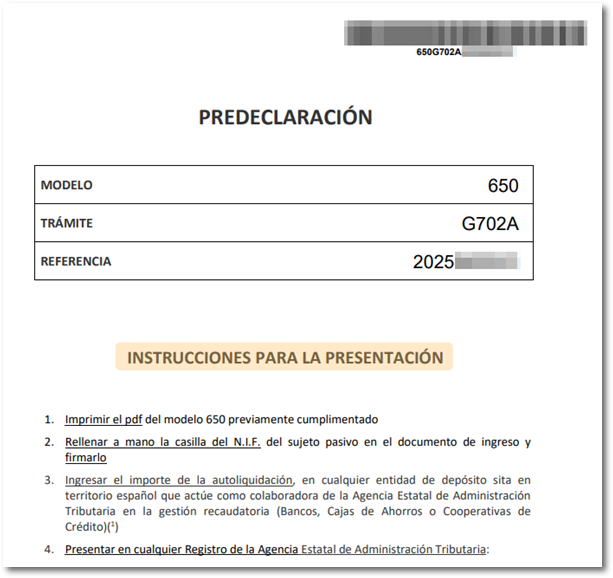
Model 650
Skip the table of contentsHow to obtain the pre-filled Form 650 for paper submission. Non-residents
If you wish to submit Form 650 for non-residents on paper, a form is available on line at the electronic headquarters to generate the preliminary return and obtain the PDF, under the Form 650 formalities.
Form 650 must be submitted in cases where taxpayers are required to fulfil their obligations in respect of this tax to the State Tax Administration and, therefore, the revenue has not been transferred to the Autonomous Communities, in accordance with the provisions of Law 22/2009 of 18 December. The filing deadline is six months from the date of the deceased’s death or from the date on which the tax return for death becomes final.
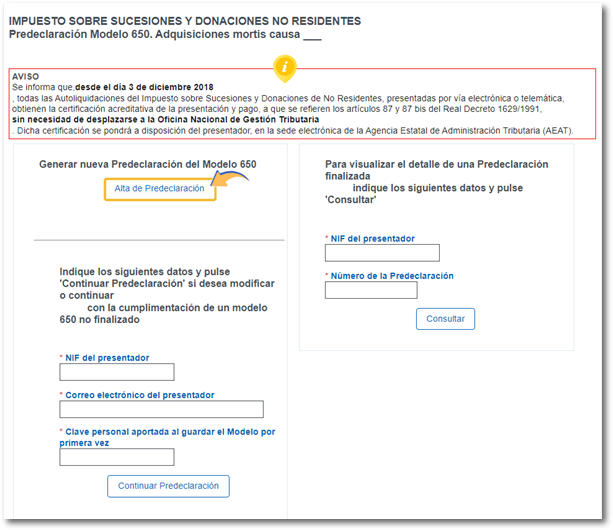
When you log in, a screen will appear showing three options:
- "Registration for pre-declaration": to generate a new pre-declaration.
- "Continue pre-filling": if you need to amend or continue filling in an incomplete Form 650. You will need to enter the submitter’s tax identification number, the submitter’s email address and the personal password provided when you first saved the form.
- "Consult": to consult the details of a completed preliminary return. You will need to provide the presenter’s tax identification number ( NIF ) and the number of the preliminary return obtained. Once you have entered the required details, you can download the finalised PDF.
Consult the "Notice" and click "Registration for Pre-declaration" to start the pre-declaration process.
The programme consists of three sections:
1. Data prior to self-assessments
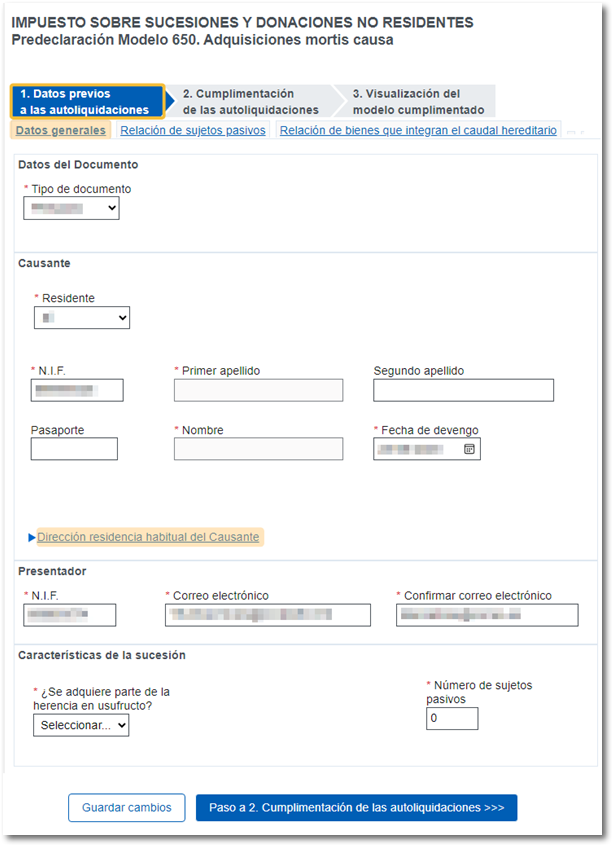
In this first step, you will find three tabs: ‘General details’, ‘List of taxpayers’ and ‘List of assets forming part of the estate’.
Please note that fields marked with an asterisk are compulsory.
You do not need to enter all the details and complete all the steps in a single session, as the ‘Save changes’ option allows you to retrieve the details you have entered so far at a later date. When saving for the first time, you must enter a personal password which, together with the tax identification number (NIF) and the filer’s email address, will be used to retrieve the tax return via the ‘Continue with pre-filing’ option on the initial screen. Before logging out, always remember to click "Save changes".
On the first tab , ‘General details’, you must specify whether the document is public or private, fill in the deceased’s personal details, add their residential details by opening the ‘Deceased’s usual address’ tab, and provide the details of the person submitting the document and the characteristics of the succession.
The filer’s details (tax identification number and email address) are required in order to continue completing the tax return at a later date; it is important to enter your email address correctly, as this, together with the personal password you have chosen, will be required to retrieve your saved tax return so that you can continue completing it.
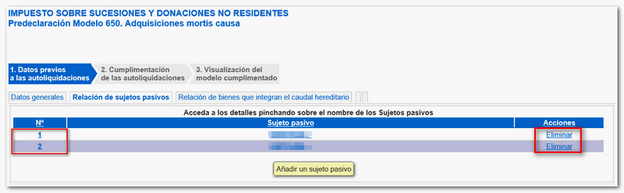
On the next tab, ‘List of taxpayers’, you must enter the details of each taxpayer (heirs) signing the self-assessment, indicating whether or not they are non-residents in Spain, and their personal details by opening the ‘Taxpayer’s usual address’ tab to add further details, the title to the estate (you may tick one or more boxes) and the settlement details (if this is a supplementary return, you must enter the reference number of the previous one). The programme will only carry out the calculations if it applies national regulations. Click the ‘Add a taxpayer’ button.
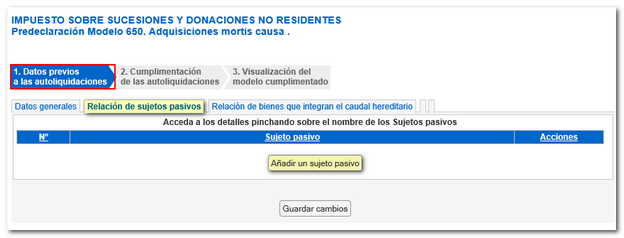
From this tab, you can also remove and perform registration for new taxpayers.
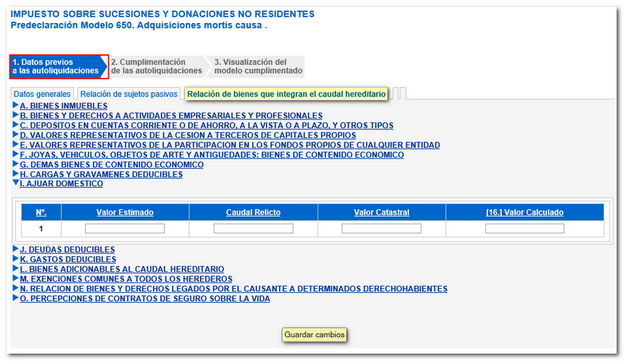
In the ‘List of assets forming part of the estate’ tab, details such as the value or percentage of ownership, depending on the type of asset, must be provided. Please note that some of these, such as the ‘Relict flow’ and ‘[16.]’ boxes, "Calculated values" are calculated automatically and cannot be edited.
If the first step is not completed correctly, a window will appear showing the errors detected when you try to continue.

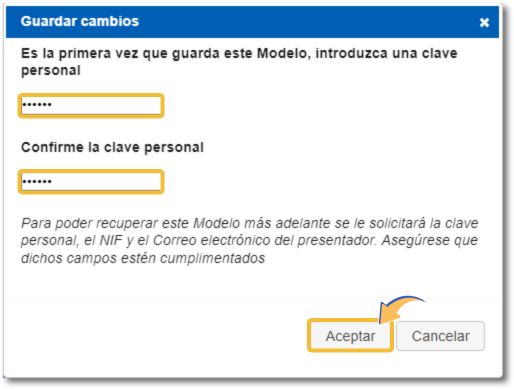
Click 'Save changes' to save the details you have entered so far. If this is the first time you have clicked this button, you will need to enter a personal password, which will be requested later, along with your tax identification number and email address, in case you have not finished filling in the form and wish to retrieve it later. Please note that it is case-sensitive.
If there are no errors in step 1, you can proceed to the next step: "Step 2." "Completing self-assessments".

2. Completing self-assessments
Clicking on the reference number or the taxpayer’s name takes you to the details of the self-assessment form, where you can complete the form.
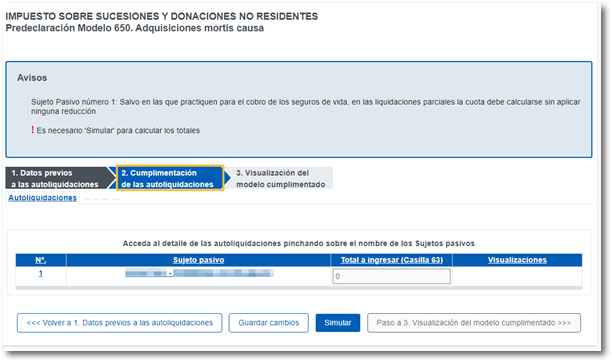
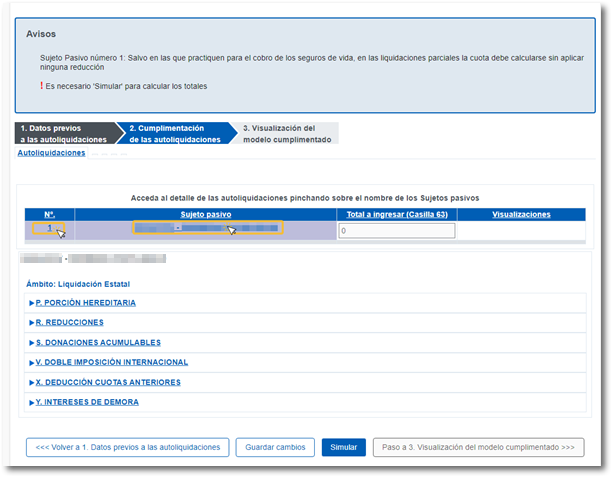
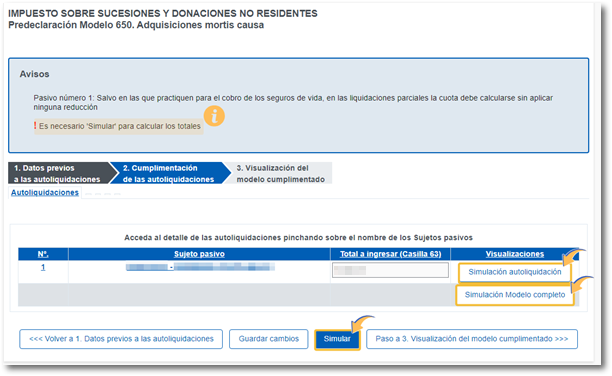
In this same window, you will find the ‘Simulate’ button, which allows you to generate a PDF showing the result of the self-assessment; however, this is not valid for submission. It will be possible to view both the individual self-assessments of taxpayers and the complete form.
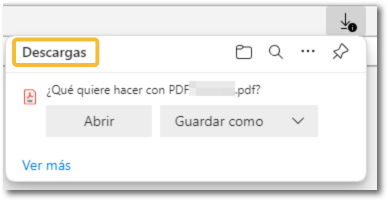
The generated PDF is saved by default in the "Downloads" folder, although you can select an alternative location.
3. Preview of the completed form
Once you have checked the tax return, click on ‘Step 3’. 'View the completed form' to obtain the pre-filled PDF version of the form and submit it on paper.
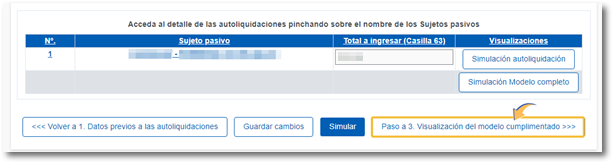
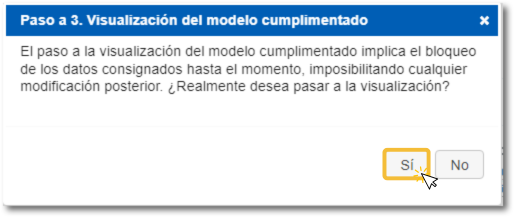
When you proceed to step 3, the data entered up to that point will be locked, preventing any subsequent changes. Click ‘Yes’ on the prompt.
You will be given a pre-declaration number, which you can use to consult the document at any time from the Form 650 home screen under the ‘Consult’ section.
The ‘View the completed form for printing’ button allows you to obtain the validated PDF. You can open the PDF document directly or save it to the location of your choice.
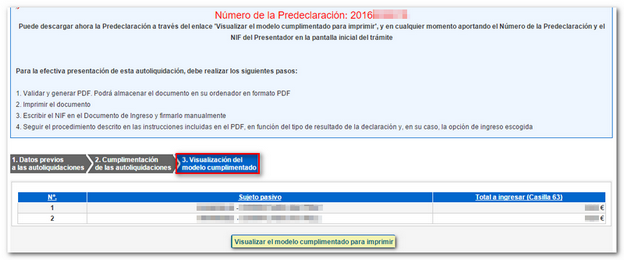
The relevant copies are generated for the parties concerned, the authorities and the payment document for the collaborating organisation, along with detailed instructions on how to submit the tax return correctly.