Models 199 to 289
Skip the table of contentsForm 233: Submission of the tax return
Form 233 can be submitted using an electronic certificate or an electronic DNI (DNIe) and, if the taxable person is an individual, also using Cl@ve.
In addition to the person named on the tax return, the submission may be made by a third party acting on their behalf, whether a social collaborator or an authorised representative, to carry out the general formality or the specific formality, GI45P.
When accessing the Form 233 formalities, a notice states that this informative declaration is for the exclusive use of school heads and must not be submitted by parents or guardians.
In the initial‘Complete the application’ window,enter the declarant’s tax identification number and the tax year to which the tax return relates.
If the taxable person is an individual, they must enter their surname and first name. If you are a legal person or an income attribution entity, please complete the ‘Name or Company Name’ field. Click the‘Submit’ buttonto continue completing the tax return.
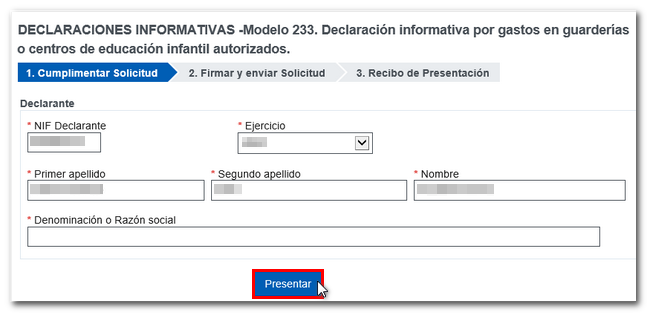
The tax return contains the following sections:
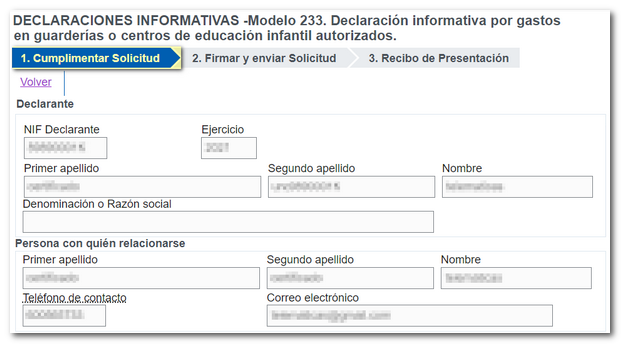
Witness
The declarant’s details, which were entered previously (and cannot be amended at this stage), are loaded, along with the contact details of the person to liaise with and to whom any information relating to the processing of the tax return should be addressed.
Registration of the declarant
You can choose to include the persons named in the tax return by completing all the fields marked with an asterisk.
The ‘Identifier’ is a field that the declarant may choose; it must be unique, as once it has been used, it cannot be reused in the financial year to which the tax return relates. In addition, the tax identification number (NIF) and the full name of the mother or the person who has the care and custody of the child must be provided; the same details for the other parent may also be provided, if desired. You are not permitted to provide your passport number instead of your DNI or NIE.
The child’s details will then be provided.
In the section ‘Full months the child has attended nursery or early years centre’, tick S (Yes) or N (No), bearing in mind that S (Yes) should only be entered if the child has attended for the whole month.
Next, you will need to enter the total amount paid, including pre-enrolment fees, tuition fees, attendance during standard and extended hours, meals and the grants received. Under no circumstances shall these fields include any sums paid by the company or employer of the child’s mother, father, guardian or foster carer.
Finally, in the ‘Type of authorisation’ field (mandatory), you must enter a ‘1’ if the declarant holds authorisation issued by the relevant education authority, or a ‘2’ if the declarant holds another form of authorisation.
The ‘Tax identificationnumber (NIF ) of the authorisation holder’ field must be completed if it differs from the tax identification number entered in the declarant’s tax identification number field.
Please also state the name of the Autonomous Community or the authorised body.
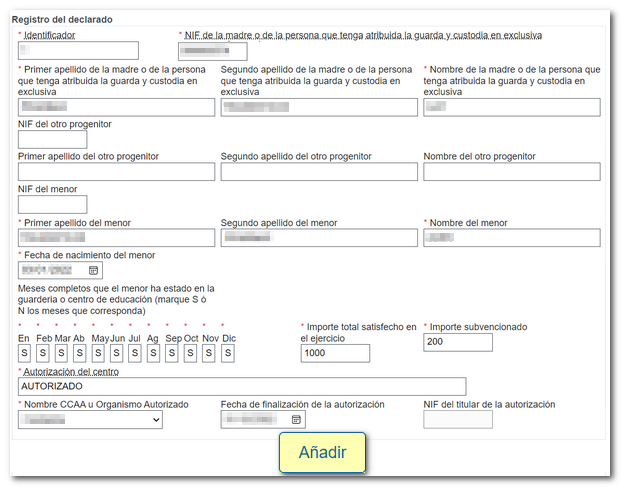
To continue adding records of those who have filed tax returns, click the "Add" button. You will see that the data is gradually being loaded into the ‘Content’ box in the file import section, located at the bottom of the page.
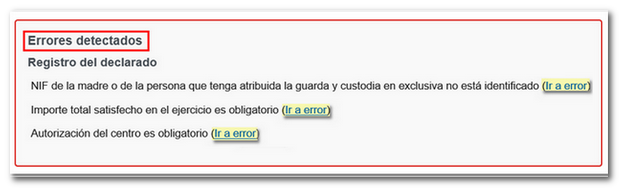
If errors are detected in the data entered when you click ‘Add’ or ‘Submit’, a description of these errors will be displayed in the ‘Errors detected’ box, along with links to the fields you need to check or correct.
Importing Files
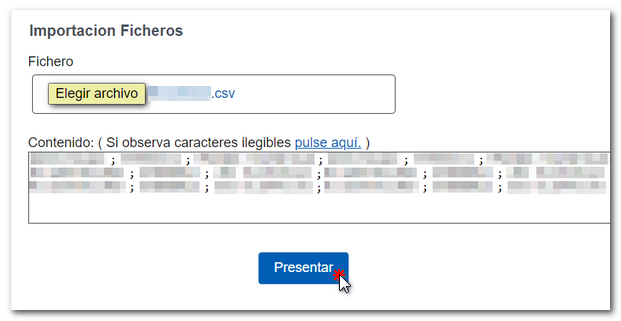
The other option for adding tax returns is to import a CVC file separated by “;”, with the data formatted to match the record layout published for Form 233 (this allows you to edit the imported data). Click the ‘Browse’ button and locate the file containing your tax return details.
Please note that if you have entered the records manually using the ‘Taxpayer’s Record’ option and then import a file, you will lose the data you have already entered and only the records from the file will remain. On the other hand, after importing a file, you can add records manually.
If some characters appear garbled, click on ‘click here’ to fix the problem.
To create the file, theAEAT(State Tax Administration Agency) provides taxpayers with a template consisting of a spreadsheet in .xlsx format which, once completed, must be saved in .csv format (comma-separated). This template contains all the columns with their labels (what we call ‘headers’), comprising 36 fields, along with instructions on how to format the fields. This template can be found under ‘Technical help’ within the form’s formalities, ‘Documentation for submitting Form 233’, “Financial Year 2025 and subsequent years” under the name “Template to assist with the submission of Form 233 from the 2025 financial year onwards”.
If the imported file contains a header, delete that header manually from the ‘Content’ box after reading the file into the form and removing any unreadable characters.
Once you have completed all the relevant entries or imported the file, click the "Submit" button.
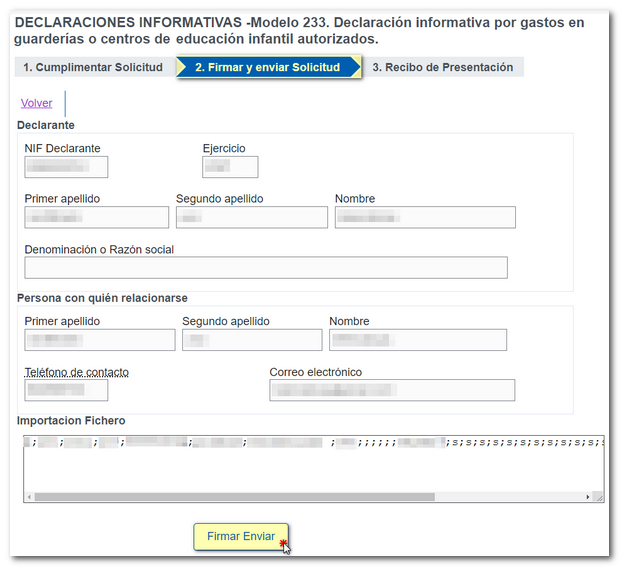
In the next step, ‘Sign and submit application’, check the details and click ‘Sign and submit’.
A new window will appear showing the encoded data from the tax return. Tick the ‘Agree’ box and click ‘Sign and Send’.
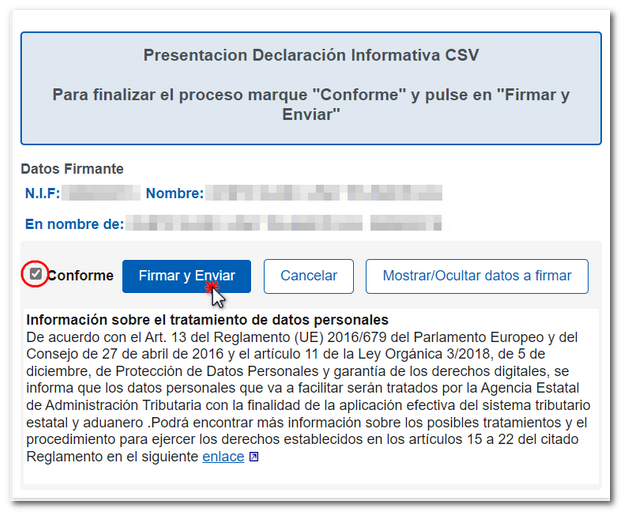
If the submission is correct, the system will display the following message: “Process completed successfully”, together with the submission details (date and time, CVC code and the submitter’s tax identification number ).