Models 181 to 189
Skip the table of contentsModel 181
To access the online submission of Form 181 via file upload, you must log in using the declarant’s electronic certificate or that of a person or entity authorised to submit forms on behalf of third parties: a social collaborator or an authorised representative.
As records containing errors or which are unidentified will not be accepted, we recommend that you do not delay your submissions and allow sufficient time to correct any erroneous records. Similarly, to avoid identification errors, we recommend that you first verify the list of taxpayers for each taxpayer using the Tax Identification service.
In addition, you will need to have a file containing the tax return you are going to submit, with the details in line with the published registration template. All alphanumeric and alphabetic fields must be left-aligned and padded with spaces on the right, in capital letters without special characters, and without accented vowels. The ISO-8859-1 encoding shall be used for language-specific characters.
All numeric fields must be right-aligned and left-padded with zeros, without signs and without grouping. All fields will contain data, unless otherwise specified in the field description. If they do not have one, numeric fields will be filled with zeros and both alphanumeric and alphabetical fields will be left blank.
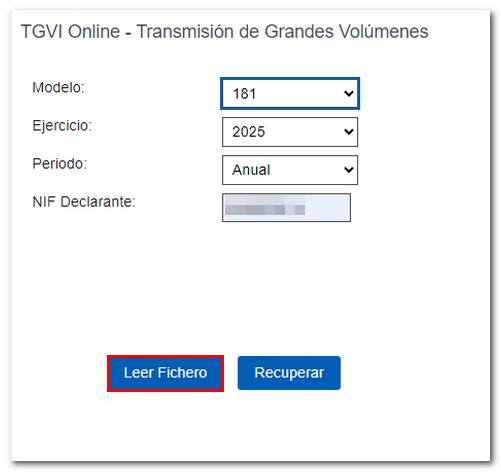
Enter the declarant’s tax identification number (NIF ) and check the details in the ‘Form’ and ‘Financial Year’ fields.
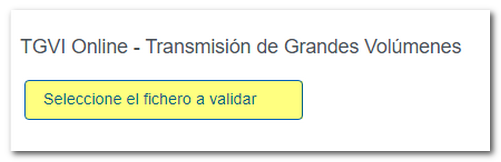
To upload a new file , click ‘Read File’ and select the file to validate. From the ‘Recover’ option, you can reload the last file validated by the application for that model, financial year and tax identification number.
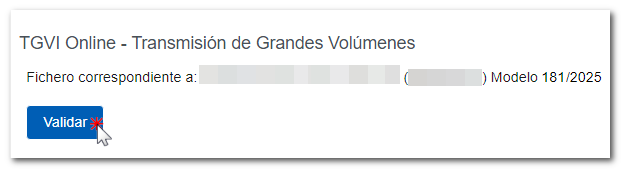
Check that the declarant’s details, the form and the tax year are correct, then click on ‘Validate’ to submit the file.
During the transfer, two progress bars will appear showing the validation percentage for both the file and the records.
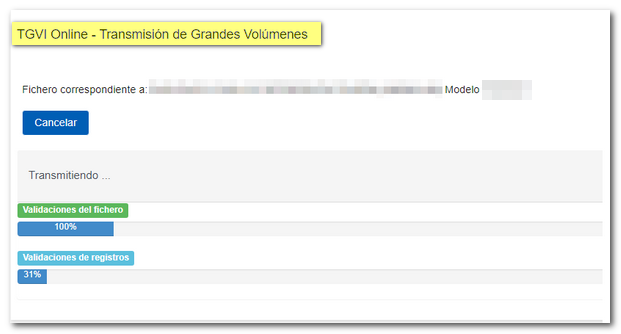
Note: At this stage of the process, only the file is validated. The presentation may be carried out in subsequent stages.
Should any incorrect records be found, a breakdown of the correct and incorrect records will be included.
From that point onwards, the presenter will be able to:
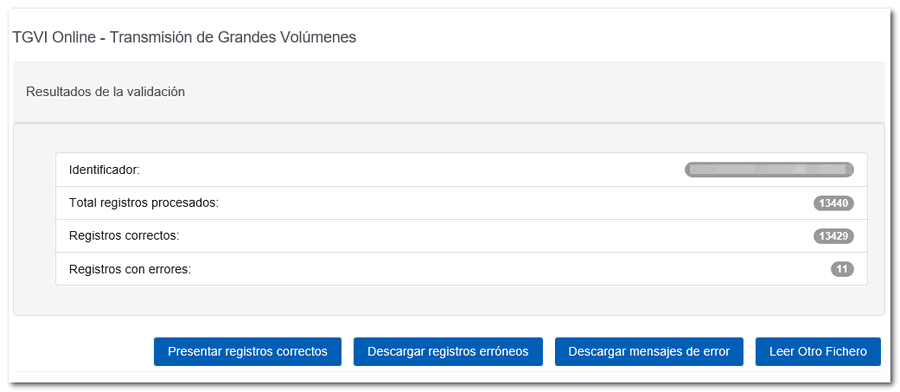
Submit accurate records
Use this option to display only the correct records. In the next window, tick the ‘I agree’ box and click ‘Sign and Send’.

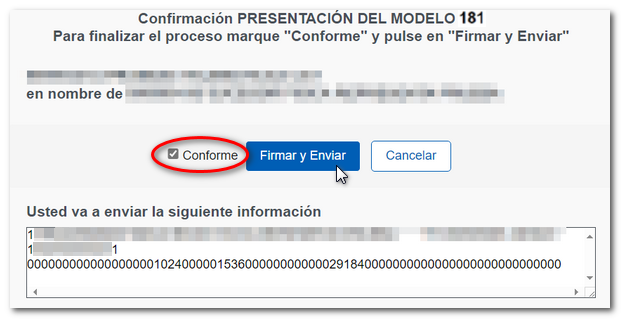
You will only receive the submission receipt if the correct details are submitted in an embedded PDF, which you can save and print. The document contains the following details regarding the submission: registration reference number, secure verification code, receipt number, date and time of submission, and the submitter’s details.
Any incorrect returns that have not yet been submitted must be corrected so that they can be submitted at a later date by means of a supplementary declaration.
Download incorrect records
Using this option, you can download a text file (formatted to match the published layout) containing all the incorrect records.

The downloaded file will be updated to reflect the number of records included. Furthermore, the Type 1 tax return (declarant and summary) will already include its own identification number, the supplementary mark and proof of the previous submission.

This file is for marking and submission. It does not contain any information about the errors detected.
Download error messages
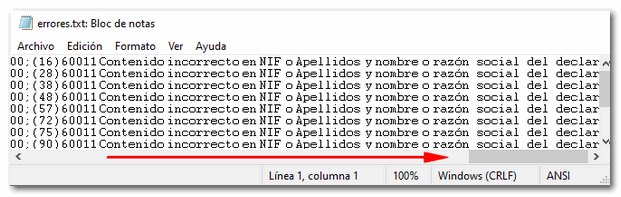
The downloaded text file contains details of the errors detected for each Type 2 (Declared) error record. Each line will display an incorrect detail record along with its corresponding error message. You need to scroll to the end of the lines to view the error codes and descriptions.
This document is for information purposes only. It will be useful for identifying the errors detected and proceeding to correct and present them.